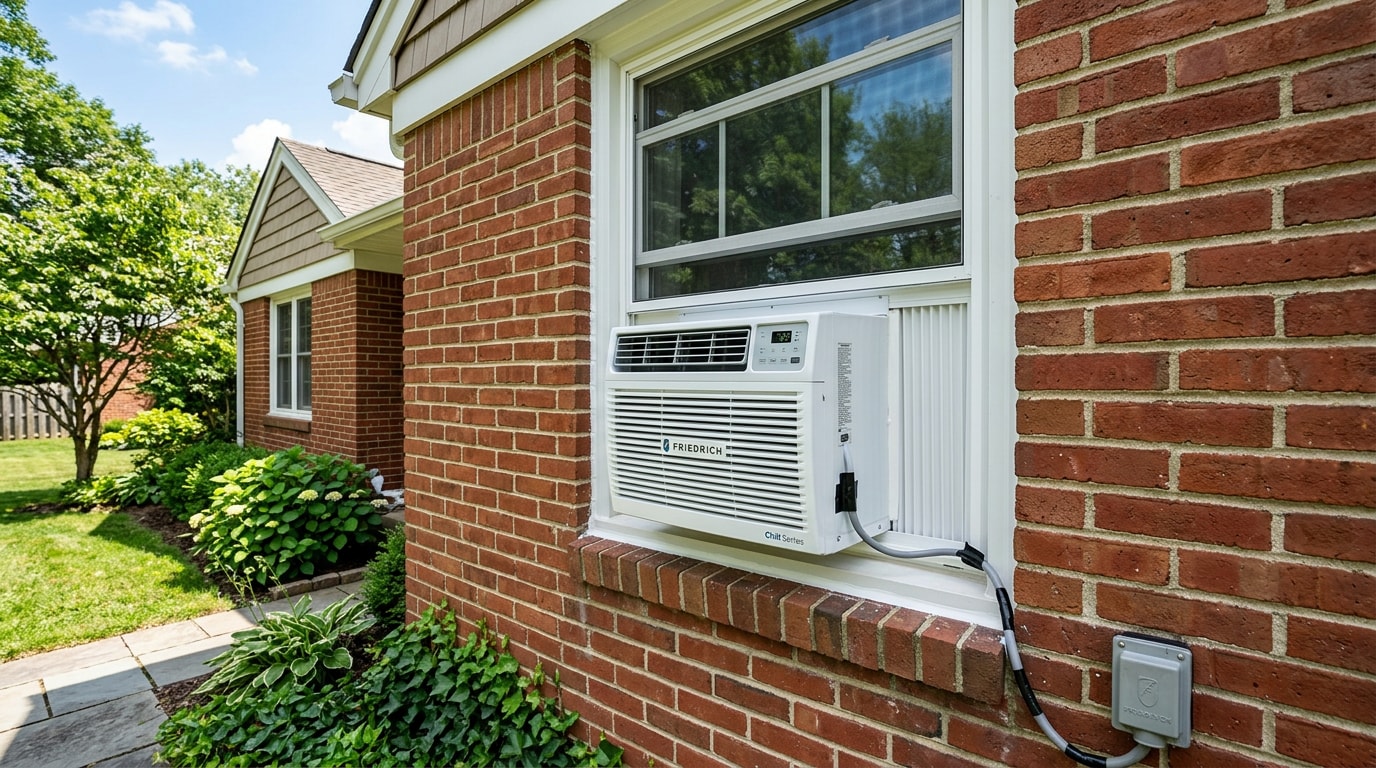
Window air conditioners in Sheffield, AL are still the fastest, cheapest way to cool a single room without committing to a full HVAC install. Get the BTU size, the outlet, or the window fit wrong, though, and you'll spend all summer fighting a unit that runs constantly and still leaves the room damp. Here's how to size, wire, and install one correctly the first time.
Choosing the Right Size: Cooling Capacity & BTUs
A window AC's cooling capacity is measured in BTUs. Matching BTUs to your room's square footage is the single biggest factor in whether the unit cools efficiently or just runs non-stop.
Too few BTUs leaves a room warm and humid. Too many causes short-cycling, which wastes energy without pulling humidity out of the air. Here's the official sizing chart:
| Room Size (sq ft) | Recommended BTUs |
|---|---|
| 100–150 | 5,000 |
| 150–250 | 6,000 |
| 250–300 | 7,000 |
| 300–350 | 8,000 |
| 350–400 | 9,000 |
| 400–450 | 10,000 |
| 450–550 | 12,000 |
| 550–700 | 14,000 |
The correct cooling capacity for your room size comes from matching the area to be cooled against the capacity needed in BTUs per hour. For Sheffield's humid, high-heat-index summers along the Tennessee River, lean toward the higher end of your room's range, especially for sun-facing rooms, kitchens, or rooms with high ceilings.
Match the Window AC to Your Window: Compatibility & Measuring
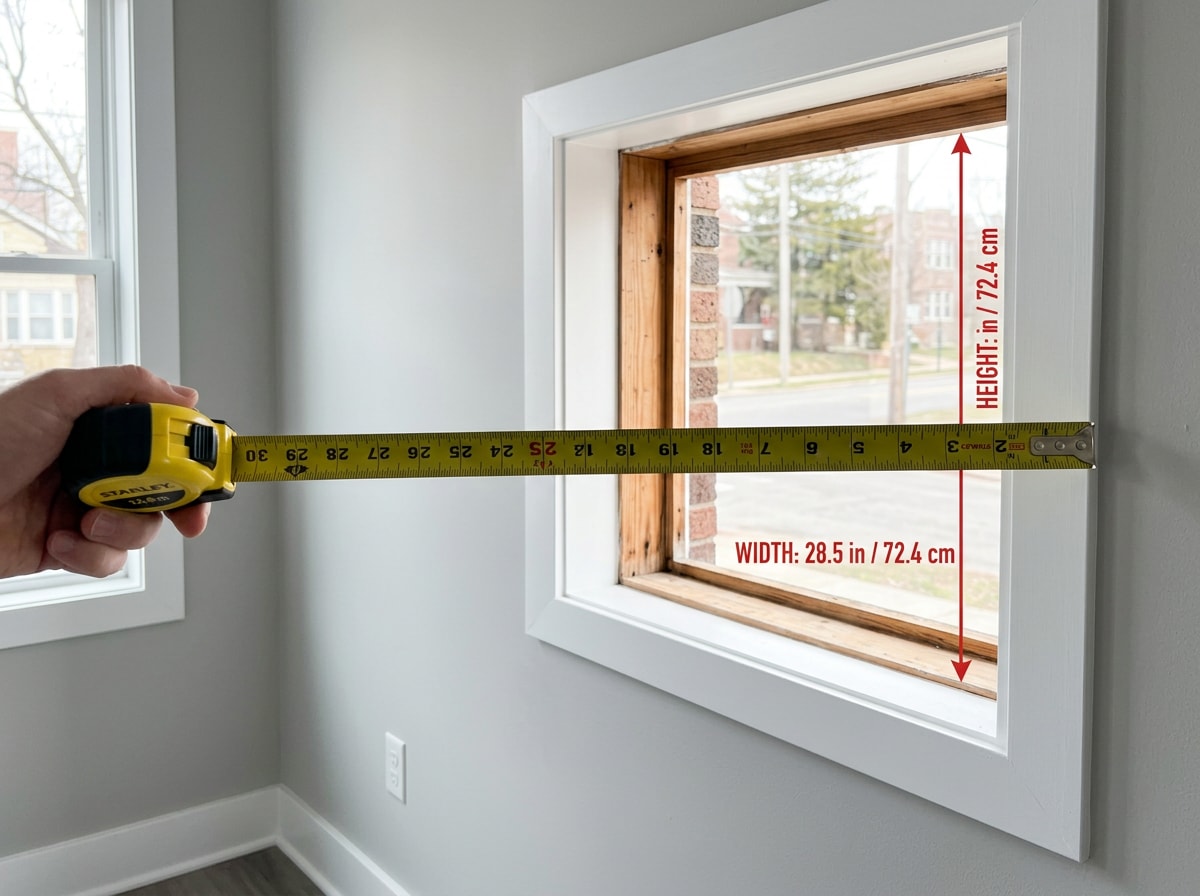
Most window units are built for standard double-hung or single-hung windows that slide up and down. Measure the smallest point of the window opening, width, height, and sill depth, without including trim. That's the true space the unit has to fill.
Plenty of homes in Sheffield and the surrounding Shoals area have older casement or sliding windows, which need specialty units rather than a standard model. Getting compatibility right before you order saves you a frustrating return trip to the store.
Need a second opinion on what will actually fit? Our team covers Sheffield and the surrounding Shoals-area and can confirm window compatibility before you buy.
Account for Adjustable Side Panels
Side panels only extend so far, typically a few inches on each side. Don't count on them to bridge a large gap between the unit and your window frame. Pick the BTU and width combination that's the closest natural match, then let the panels handle the final seal.
A tip most buying guides skip: improper installation of the standard accordion side panels can increase air leakage by as much as 10 percent. Swapping the stock accordion panels for cut rigid foam board, sealed with foil tape, closes that gap far better and keeps conditioned air from leaking around the unit all summer.
Energy Efficiency: EER, CEER, and ENERGY STAR Ratings
Check the EER (energy efficiency ratio) or CEER (combined energy efficiency ratio) before buying. A higher number means more cooling per watt of electricity. The U.S. Department of Energy recommends you look for units with an EER of 10 or higher when shopping for a new room air conditioner.
ENERGY STAR-certified window units must meet minimum efficiency thresholds set by the EPA, and a unit matched correctly to your room size will run more effectively than one that's too big for the space. Check the yellow EnergyGuide label on the box, not just the marketing copy, before you commit to a model.
Electrical & Power Requirements Before You Start
Every window unit needs a dedicated circuit and a grounded, three-prong outlet within reach of the cord, never a shared circuit already running other appliances. If you're installing a 12,000-BTU unit or larger, or your outlet isn't grounded, call a licensed electrician before you plug anything in.
Extension cords and surge protectors aren't safe substitutes. Overloaded extension cords and power strips can present a serious fire hazard, and there are about 2,000 residential fires each year associated with electric cords or plugs. If you're installing the unit in a kitchen or near a sink, check whether your local electrical code requires a GFCI-protected outlet for that location before you plug in.
Window Air Conditioner Installation Guide: 7 Steps
Here's how to install a window air conditioner, combining the most common professional and DIY sequences into one process. Grab a helper and your unit's manual before you start.
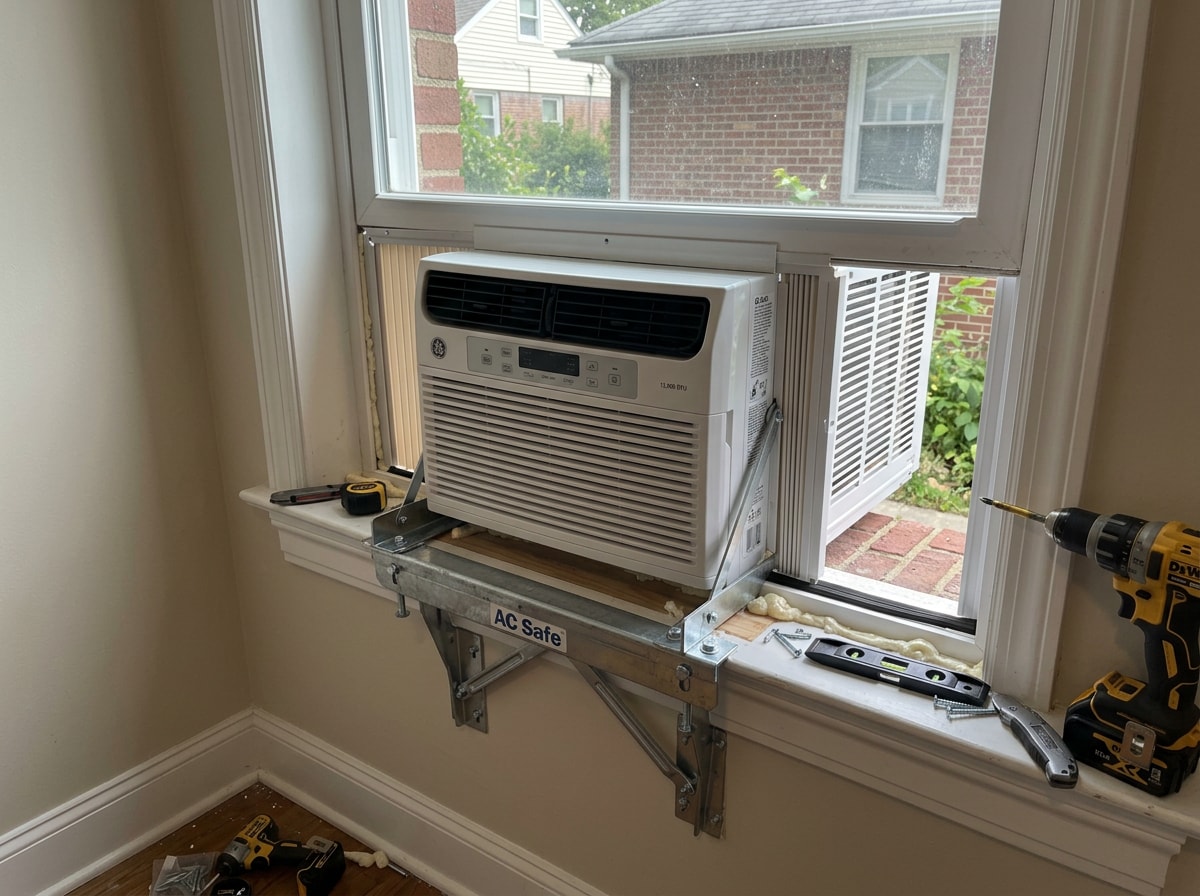
Step 1: Measure and mark the center of your window. Measure the opening's width and mark the center point so the unit sits balanced once installed.
Step 2: Assemble the unit and attach the side panels. Follow the manual, then loosely attach the panels so they're ready to extend later without extra fumbling.
Step 3: Prepare the window opening. Open the window fully and check the sash and sill for rot or damage. A weak frame won't safely support the unit's weight.
Step 4: Lift and place the unit in the window. This is a two-person job. Window units are heavy and awkward to balance alone. Set it on the sill, then lower the sash behind it.
Step 5: Install the angle or L-brackets. Screw them into the upper sash track so the window can't be forced open from outside once the unit is in place.
Step 6: Extend and secure the side panels. Slide them out to meet the window frame, then screw them into position to close any remaining gaps.
Step 7: Seal gaps and start cooling. Add foam weatherstripping around any remaining openings, plug the unit into its dedicated outlet, and start cooling.
Prefer to skip the lifting and the guesswork? Browse our air conditioning installation services and we'll handle the measuring, wiring checks, and sealing for you.
Maintenance & Seasonal Care
A few habits keep a window AC running efficiently for years:
- Clean or replace the filter every two to four weeks during peak cooling season.
- Never leave an unsecured unit resting in an open window; the L-brackets should be installed before you lift it, not after.
- Store the unit upright indoors once cold weather arrives to protect the compressor from freeze-thaw cycles.
- Check the drain path for standing water, which can breed mold inside the housing.
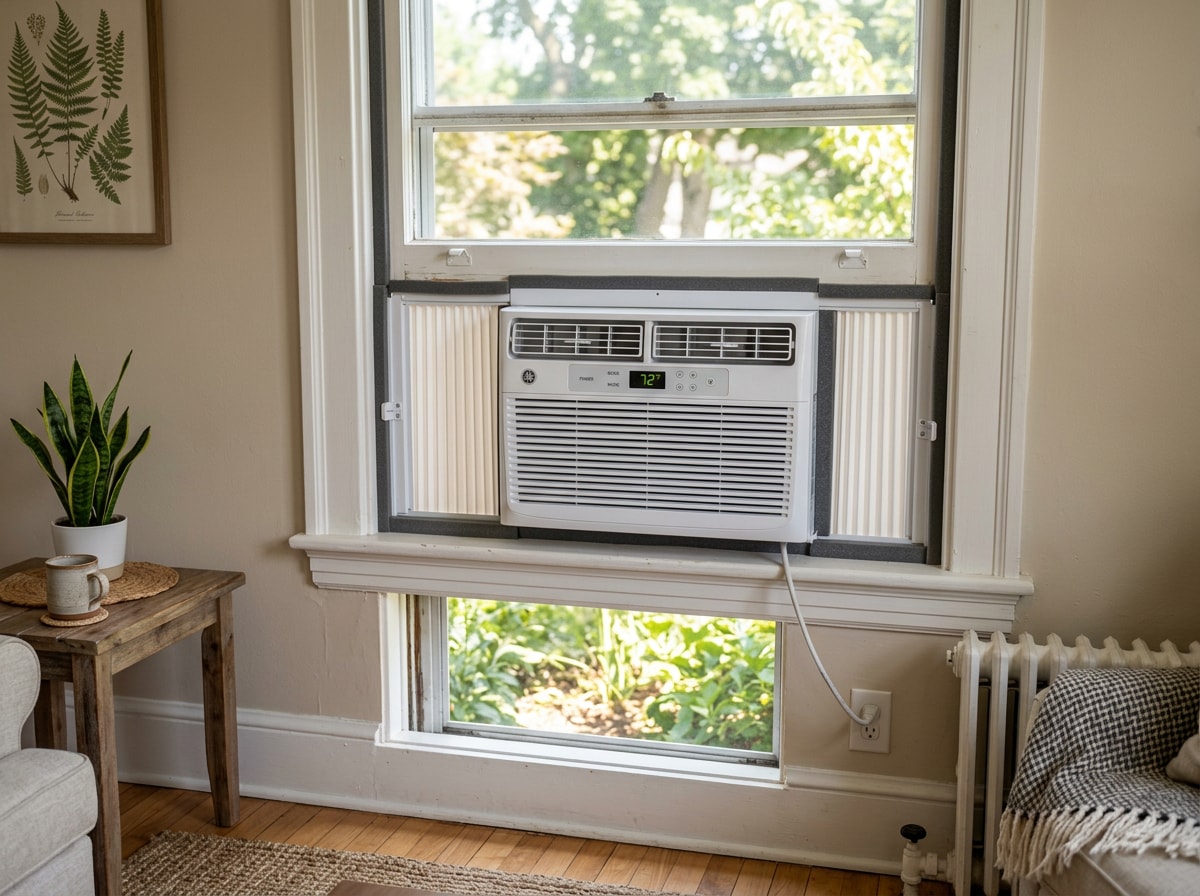
Routine upkeep matters more here than most homeowners expect. Our air conditioning maintenance technicians see the same failure pattern on service calls across Sheffield every August: a dirty filter choking airflow until the compressor works overtime and trips the breaker.
When a Window Unit Isn't the Right Fit
Window air conditioners make sense for one or two rooms. Once you're running three or four units across an older Shoals-area home for most of the summer, the math starts to favor a different setup. On service calls across Sheffield, Tuscumbia, and Muscle Shoals, we regularly see homes running two or three window units that would cost less to operate and look better from the street with a single ductless or central system.
If that sounds like your situation, it's worth comparing heat pump installation or a full air conditioning installation against the cost of running multiple window units year after year. You can also see examples of recent local installs on our projects page.
Curious whether a window unit even pulls in fresh outside air the way you'd expect? We cover that question in detail in Do Window AC Units Pull Air From Outside in Sheffield, AL?
FAQ
How do I know what BTU rating I need?
Match your room's square footage to the chart above, then adjust upward for sun exposure, high ceilings, or kitchen use. When in doubt, size up slightly rather than down for better humidity control.
Will it fit in my window? What window size is required?
Most standard double-hung windows between 23 and 36 inches wide accommodate a window AC with its side panels extended. Measure your exact opening before buying to confirm fit.
How much does it cost to install a window air conditioner?
DIY installation costs little beyond the unit itself. Professional installation typically runs in the low hundreds of dollars depending on unit size and whether a new outlet or circuit is needed. Request a free estimate for a number specific to your home.
How long does it take to install a window air conditioner?
A straightforward installation usually takes 30 to 60 minutes with two people. Older or damaged window frames can add extra time for repairs beforehand.
Can I run a window AC on a regular wall outlet?
Only if the outlet is grounded, dedicated to that circuit, and rated for the unit's amperage. Larger units (12,000 BTU and up) often need a dedicated 20-amp circuit; check your unit's label and call an electrician if you're unsure.
How long do window air conditioners last?
Most window units last 8 to 10 years with regular filter cleaning and proper off-season storage. Units left outdoors or run on undersized wiring tend to fail sooner.
Is a window AC cheaper to run than central air?
For cooling one or two rooms, yes. Once you're running several units to cover a whole house, a mini-split or central system usually costs less per season and lasts longer.
Window air conditioners in Sheffield, AL are a smart, affordable option when they're sized and installed correctly, but a mis-sized unit or an overloaded outlet turns that savings into a summer-long headache. If you'd rather have a pro handle the sizing, the wiring check, and the install, get a free estimate from the team at Henn Heating & Air, serving Sheffield, Muscle Shoals, Florence, Tuscumbia, and the surrounding Shoals area.
This guide is maintained by the licensed HVAC technicians at Henn Heating & Air. Questions about your specific install? Contact us directly.