Do window AC units pull air from outside in Sheffield, AL? For the vast majority of units, no. They recirculate the air already inside your home and only send heat outdoors. One small lever can flip that answer entirely, and knowing where it is could change how your next power bill looks.
How a Window AC Actually Moves Air
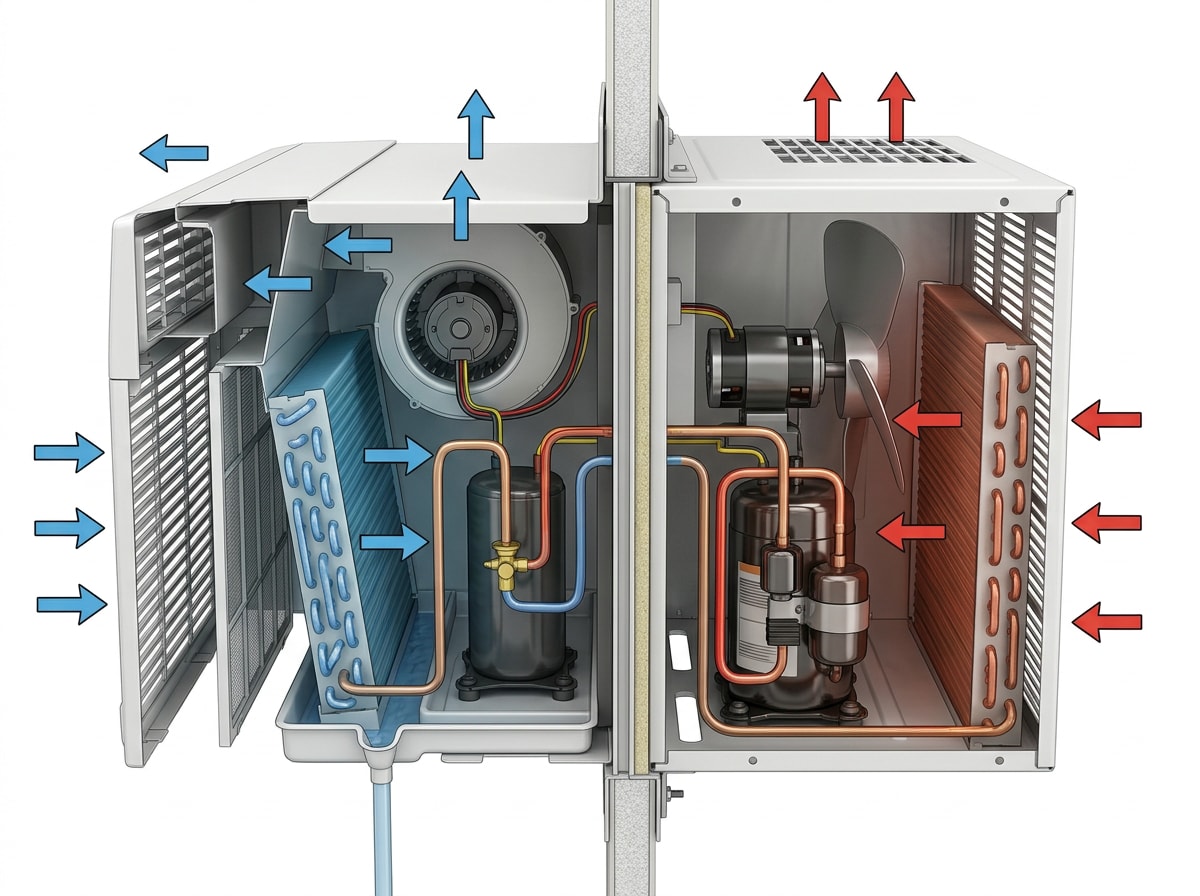
A window AC runs two separate air paths at the same time: one that serves the room, and one that handles heat rejection outside. They are not the same airflow, and they are not supposed to mix.
Warm room air gets pulled in through the front grille, passes over the cold evaporator coil, and comes back out as cooled, dehumidified air blowing into the room. That loop never leaves the house.
Meanwhile, the heat the refrigerant absorbed during that process travels through the refrigeration cycle to the condenser coil on the back half of the unit, where it's released outdoors along with warm exhaust air. This outdoor side runs independently of what's happening inside the room.
| Air path | Where it happens | What it does |
|---|---|---|
| Indoor circuit | Front grille to evaporator coil to room | Cools and dehumidifies air already in the house |
| Outdoor circuit | Condenser coil, exhaust fan, drain | Dumps absorbed heat outside, never enters the room |
Grasping that distinction is the key to understanding why a window AC mostly recirculates indoor air instead of exchanging it with the outdoors. If your unit is struggling to keep up with this split, it may be worth having it evaluated through an air conditioning repair visit before replacing it outright.
A Window AC Is a Sealed System, With One Exception
A window air conditioner is built as a closed-loop system that doesn't freely exchange air between the indoors and outdoors. The rear section handles heat removal, hot-air exhaust, and condensate drainage, none of which is meant to pump outside air back into the room.
That said, it's worth hedging slightly: not every model behaves identically. Federal researchers who tested window units at the National Renewable Energy Laboratory found that window air conditioners have low minimum efficiency standards, and their installation typically results in air leakage, which significantly reduces the equipment's performance . In plain terms, the sealed-system design is the rule, but sloppy installation is the exception that lets outside air sneak in anyway.
The "Fresh Air Vent" Myth: What That Setting Actually Does
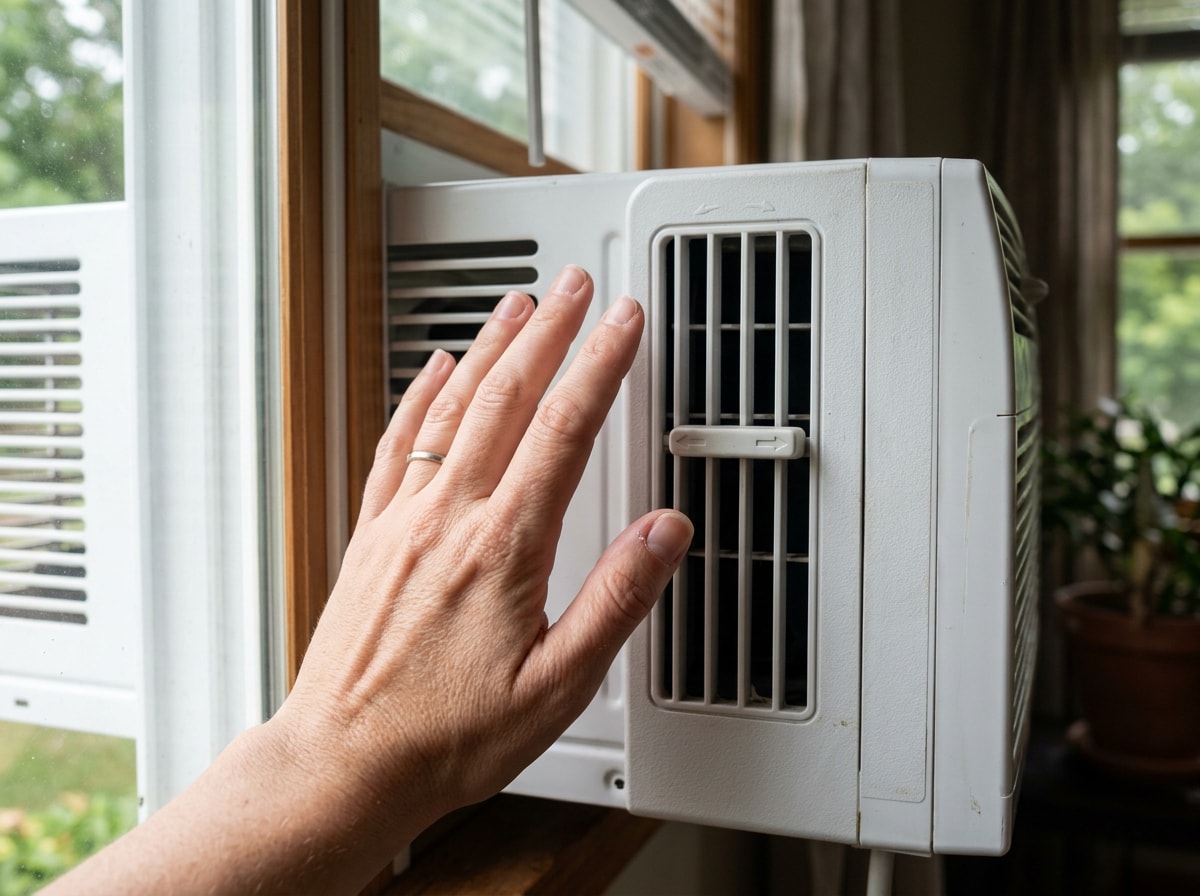
Many window units have a lever or slider labeled "vent" or "fresh air," and that single control is the biggest source of confusion on this topic. Most window air conditioners don't pull in meaningful outside air by default. A smaller number include a mechanical vent or damper that allows limited fresh-air intake as an optional feature, not the standard operating mode.
When that vent is open, the unit pulls in hot, humid outside air, which forces the compressor to work harder to hit your set temperature. For efficient cooling during North Alabama's humid summers, that vent lever should generally stay closed.
Why the Myth Sticks Around
Half the machine hangs outside your window, you can feel air movement near the unit, and the control panel literally mentions venting, so it's an easy leap to assume a steady supply of outside air is flowing in. In reality, that mix-up comes from conflating cooling with ventilation. If you actually want fresh outdoor air circulating through your home, a window AC isn't built for that job.
Signs Your Window AC Is Pulling in Outside Air
Even though recirculation is the standard behavior, leaks and open vents can still let outside air sneak in. On service calls around Sheffield, AL, we most often trace this back to foam weatherstripping that compressed flat after two or three summers, not a defective unit.
A standard window AC cools by recirculating indoor air. If outside air is getting in, it's almost always one of three things:
- An open fresh-air vent setting
- A rushed or sloppy installation
- Gaps or worn seals around the cabinet itself
Homeowners usually notice it before they can explain it: a faint dusty or stale smell, warm streaks of air near the unit's edges, or a room that feels muggier than the thermostat reading suggests. Gaps left over from a rushed installation are especially common in older double-hung windows that were never a perfect fit to begin with.
A Quick At-Home Check
Turn the AC to cool mode, then hold your hand near the top or bottom edge of the unit. If you feel air movement that seems to be coming from outside rather than blowing into the room, the fresh-air vent is probably open. Pair this with a simple smell check: cut grass, exhaust, or humidity odors while the unit runs usually point to an open vent or a leaking cabinet seal.
Why Leaks Make Cooling More Expensive
Unwanted outside-air leakage doesn't just feel uncomfortable, it costs money. ENERGY STAR notes that an improperly installed room air conditioner leaks as much air as a 6-square-inch hole, increasing energy costs and making your home less comfortable . That adds up fast in a climate like the Shoals area, where summer humidity already keeps compressors working overtime. If gaps around the cabinet turn out to be a bigger issue than the unit itself, a ductwork sealing evaluation can confirm whether the leak is isolated to the window or part of a larger air-sealing problem in the home.
Do Window AC Units Bring In Smoke, Smells, or Pollution?
Generally, no. If you're smelling smoke or outdoor pollution through your window unit, that points to an open vent or a leaking installation seal, not a design feature meant to draw in outside air.
This matters most during wildfire smoke events or high-pollution days. The EPA recommends that people close the fresh air intake if your cooling or ventilation system has one (sometimes called "recirculate mode") during smoke events, and keep windows and doors shut while relying on filtered indoor air circulation instead.
Practically speaking: close the fresh air vent if your unit has one, inspect the window seal for gaps, and consider a portable air purifier on especially bad air-quality days.
Maintenance Tips to Maximize Efficiency
Good upkeep keeps a recirculating system working the way it's supposed to.
- Clean filters monthly during cooling season. Dirty filters block airflow and can reintroduce dust and allergens into air that's supposed to be getting cleaner.
- Check the installation area once a year. Small gaps from a shifted window frame let unfiltered outdoor air in, even when the unit itself runs fine mechanically.
- Re-inspect seals as the weather changes. Seasonal temperature swings can shift window frames slightly, so last year's seal isn't guaranteed to still be airtight.
- Keep the unit level. A tilted unit drains condensation poorly and can strain the compressor.
For homeowners juggling an older central system alongside a window unit, a scheduled air conditioning maintenance visit can catch problems before they show up on your energy bill. And if the issue turns out to be electrical or related to a failing thermostat rather than airflow, our AC thermostat repair guide for Florence, AL walks through diagnosis and typical repair costs.
Homeowners in Sheffield, AL dealing with an aging window unit that can't keep up with Shoals-area humidity sometimes find it's more cost-effective to move to a small ductless or central system. If you're weighing that decision, get a free estimate and we'll walk through the options for your specific room or home.
This guide was reviewed by the licensed HVAC technicians at Henn H&A, who service window and central air conditioning systems throughout Sheffield, Muscle Shoals, Florence, and the surrounding Shoals area. You can see examples of recent cooling and ductwork work on our projects page.
FAQ
Do window AC units bring in fresh air?
Usually no. Most window AC units recirculate indoor air only. A small number include an optional vent feature, but it isn't the default or recommended setting for efficient cooling.
Can window ACs filter outside air?
Not effectively. The internal filter only cleans the recirculated indoor air passing over the evaporator coil. It isn't designed to filter air pulled in from outside.
Why does my window AC smell like outside?
That smell usually points to the fresh-air vent being open or a leaking seal around the window installation. Checking both is the fastest way to track down the cause.
When a window AC is in fan mode, does it bring in outside air?
No. Fan mode just circulates indoor air, the same as cooling mode, but without running the refrigeration cycle. The unit only brings in outside air if the vent lever is manually opened, regardless of which mode it's in.
Why are window AC units placed with the back half outside?
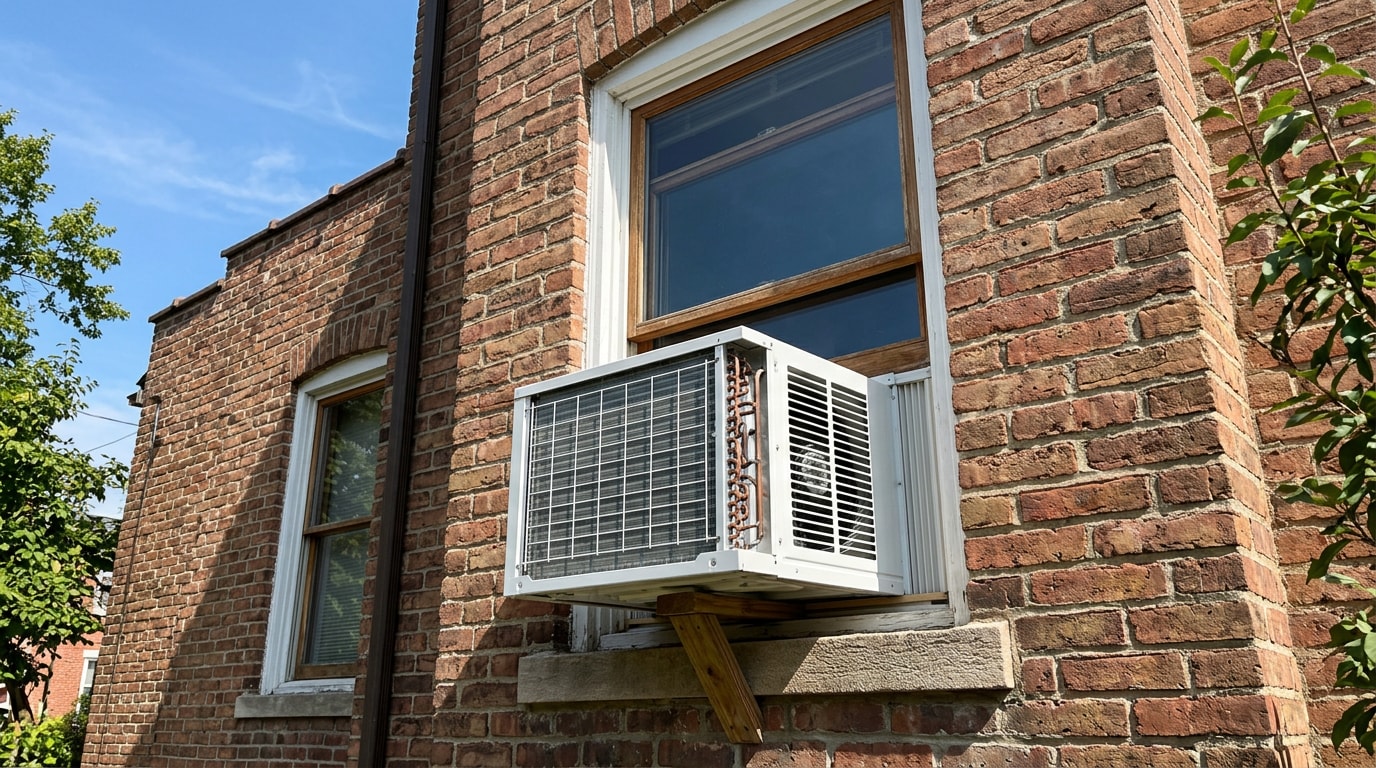
The back half sits outside to expel the heat pulled from your indoor air. That section houses the condenser coil and exhaust fan, which release heat outdoors so the room gets cooled without any of that heat ending up back inside.
Is it safe to run a window AC during wildfire smoke or poor air quality days?
Generally yes, as long as the fresh-air vent is closed and the cabinet seal is tight. Keep windows and doors shut and run a portable air purifier in the room as an added layer of protection.
Do portable AC units pull air from outside the way window units sometimes do?
Single-hose portable units can actually pull in a small amount of outside air to replace the air they exhaust through the window hose, which is a different mechanism than a window unit's optional vent lever. If outside air infiltration is a concern, a window or through-the-wall unit with the vent kept closed is usually the tighter seal of the two.