Hot water boilers in Tuscumbia, AL keep older brick and frame homes warm through cold snaps that forced-air systems often struggle with. This guide breaks down how these systems work, what installation, repair, and maintenance actually involve, and which warning signs mean it's time to call someone. Read the whole thing or jump straight to the section you need.
Boiler Installation, Repair & Maintenance in Tuscumbia, AL
Most homeowners searching for hot water boilers in Tuscumbia, AL need one of three things: a new system, a repair, or a tune-up before winter. Here's what each actually involves.
Boiler Installation
A proper boiler installation starts with sizing the unit to your home's actual heat load, not just swapping in whatever fits the old footprint. An undersized boiler runs constantly and wears out early. An oversized one short-cycles and wastes fuel.
Alabama regulates boiler and pressure vessel installations through the Department of Labor, and permits are generally required for larger commercial and process units. Heating boilers installed in private residences are specifically exempted from the state's boiler permit requirements, which is a detail a lot of homeowners never hear until they're mid-project. That exemption doesn't mean skip the inspection mindset. It means your licensed installer still needs to size the system correctly, vent it to code, and connect gas or electrical lines safely, permit or not.
Our HVAC installation) team handles sizing, venting, and startup from consultation through commissioning.
Boiler Repair
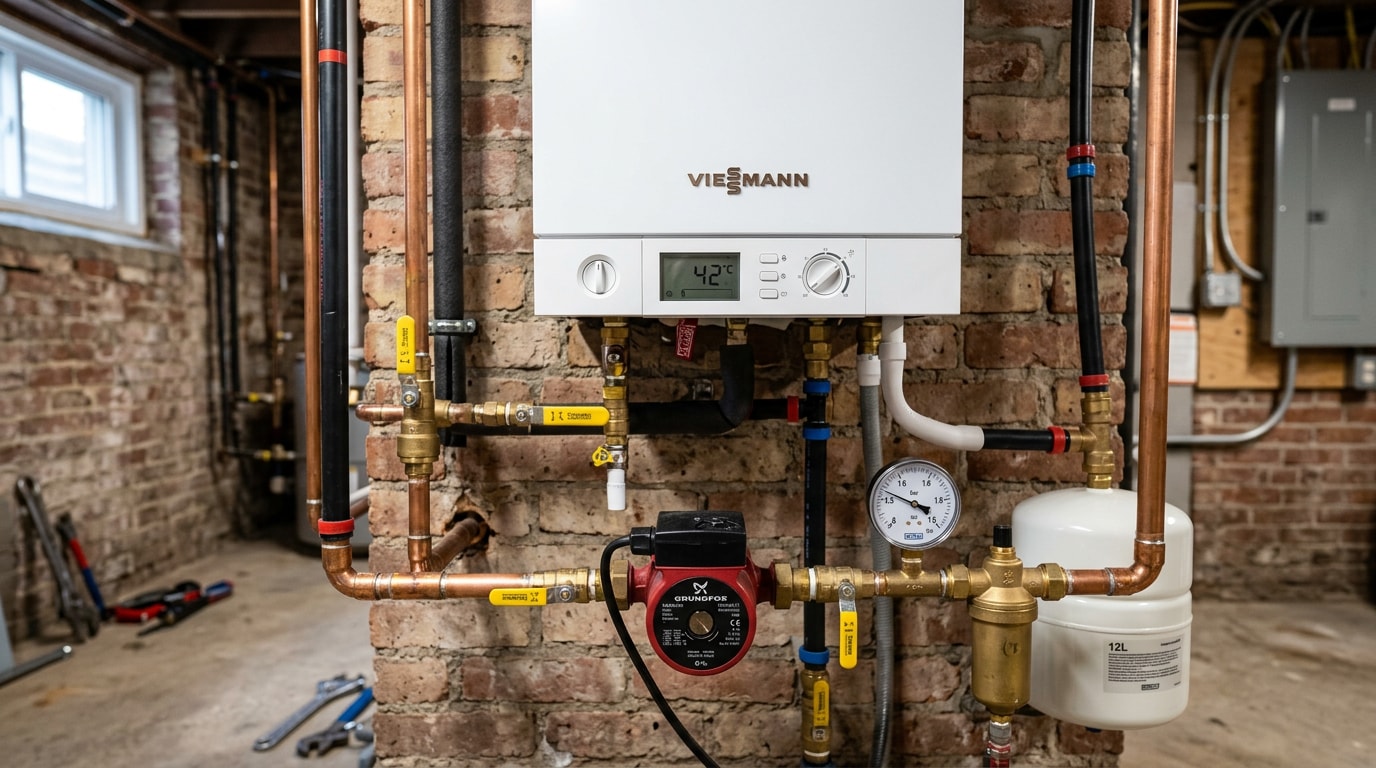
Common repair calls fall into a short list: no heat at all, a pilot or ignition fault, banging or kettling noises, or a pump that's failed. A technician typically checks the combustion chamber, inspects gaskets and seals, and verifies water temperature and pressure against the manufacturer's spec sheet.
If a boiler quits during a cold snap, the priority is safety first, then restoring heat. Our HVAC repair) crew and emergency HVAC service) line cover exactly that kind of call, day or night.
Boiler Maintenance
An annual service visit clears sediment, checks gaskets and seals, and confirms the safety controls fire correctly before the first hard freeze. We've pulled sediment-clogged circulator pumps out of 1960s Shoals-area homes that would have failed outright by Christmas if the owner had waited one more season. That's the real argument for a yearly checkup over a "run it till it breaks" approach.
Preventive HVAC maintenance) catches these issues while they're still cheap to fix. Ready to get ahead of winter? Get a free estimate and we'll walk your system before temperatures drop.
How Hot Water Boiler Systems Work
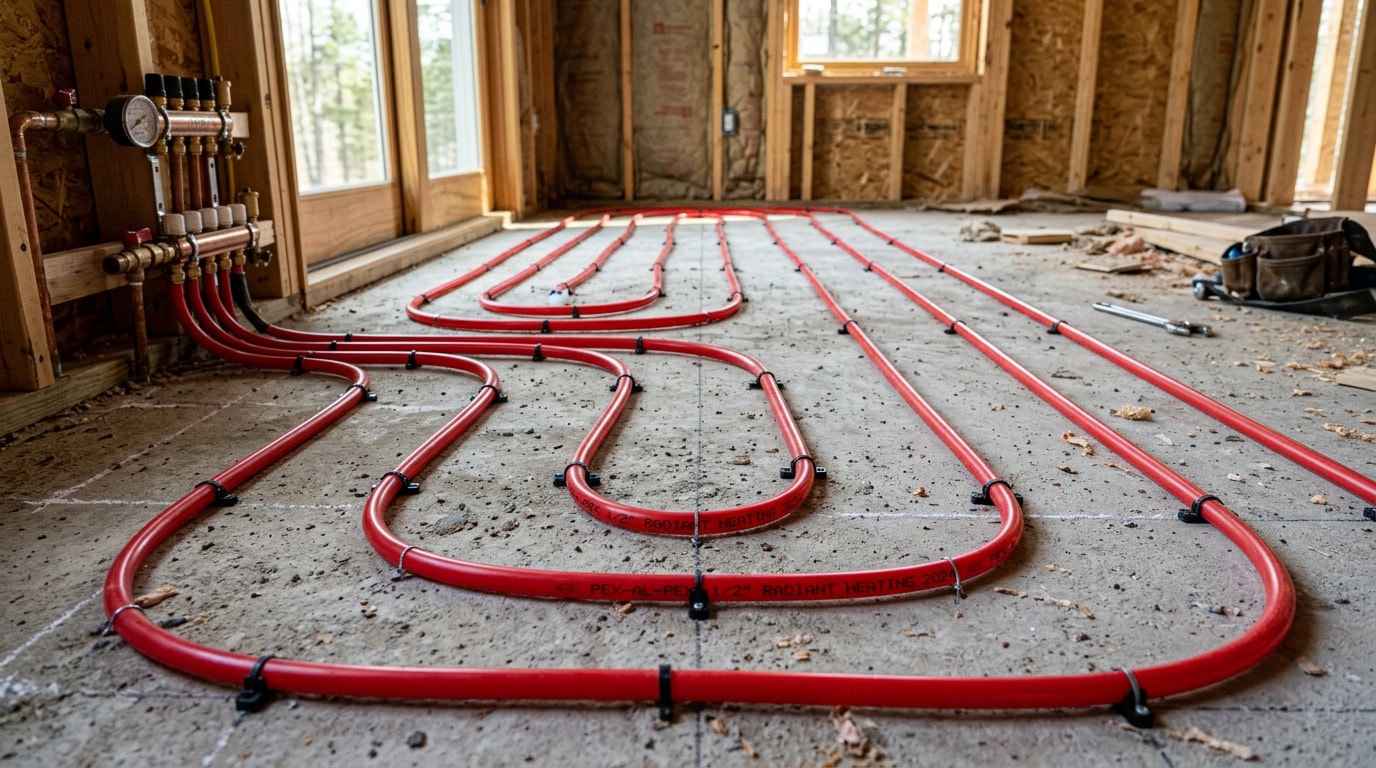
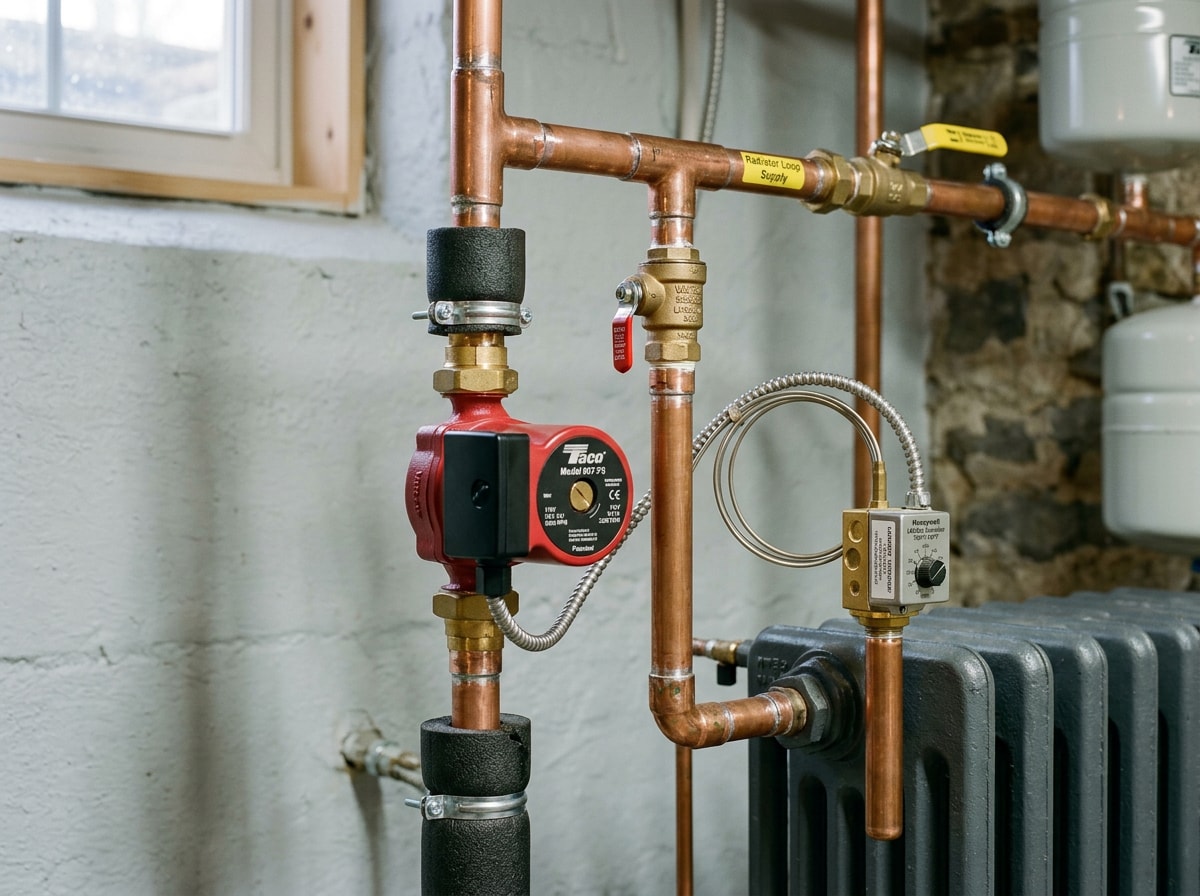
A hot water boiler heats water in a sealed chamber. A circulator pump then pushes that heated water through pipes to radiators, baseboard units, or radiant floor loops.
The water releases heat into the room, then returns to the boiler to be reheated. This closed loop is the core difference from a forced-air furnace, which heats and blows air through ductwork instead.
The thermostat signals the burner to fire once room temperature drops below the set point. The burner shuts off when water hits target temperature, but the pump keeps circulating until every zone is satisfied. Homeowners who've lived with both usually describe radiant heat as steadier and less drying than forced air.
Types of Boilers We Install and Service
Three categories cover most homes and small commercial buildings in the Tuscumbia area:
- Combi boiler – Heats water on demand with no storage tank. Suits smaller homes tight on mechanical room space.
- System boiler – Pairs with a separate hot water cylinder. Better for homes with multiple bathrooms that need simultaneous hot water.
- Conventional boiler – Works with both a cylinder and a cold-water storage tank. Common in older Shoals homes already plumbed that way.
Commercial boiler systems also show up across local restaurants, churches, and small manufacturing shops that need steady process heat or high-volume domestic hot water. A qualified mechanical contractor sizes these to the building's actual load rather than guessing, which is where a lot of oversized, inefficient commercial installs go wrong.
Signs Your Boiler Needs Professional Attention
Call a technician if your boiler shows any of these:
- Banging, whistling, or kettling noises
- Heats some rooms but not others
- Visible leaks around fittings or the base
- Pressure or reset switch trips repeatedly
- Any gas odor or soot near the unit
Uneven heating usually means sludge has settled in radiators or pipes and is blocking flow. A leak, even a small drip, needs a prompt look since it can signal a failing seal or a cracked component.
A suspected gas odor or soot buildup is a different category entirely: it's a safety emergency. Malfunctioning combustion appliances can produce carbon monoxide, and the CDC's guidance on furnace and boiler safety makes clear this gas kills hundreds of people a year and sends thousands more to the hospital. If you smell gas or suspect a leak, get out, call for help, and don't go back in to "just check."
Boiler Efficiency and Energy Savings
Older standard-efficiency boilers typically run in the 65-80% AFUE range, and units older than 25 years can drop to 65% or lower, meaning a meaningful share of fuel energy escapes as exhaust instead of heating your home. A modern condensing boiler recaptures heat from flue gases before it vents outside, which is how newer units push efficiency so much higher.
ENERGY STAR certified boilers carry AFUE ratings of 90% or greater for gas models and 87% or greater for oil models, and some of the best condensing units on the market now reach 95% AFUE or higher. For a typical Tuscumbia winter, replacing a 25-year-old boiler with a high-efficiency model can meaningfully lower heating costs over a season, though actual savings vary with home size, insulation, and fuel pricing.
| Boiler Type | Typical AFUE | Best Fit |
|---|---|---|
| Standard (25+ years old) | 56-70% | Likely due for replacement |
| Standard, newer non-condensing | 70-80% | Working but outdated |
| ENERGY STAR gas condensing | 90%+ | Most new residential installs |
| High-efficiency condensing | 95-97%+ | Max fuel savings, higher upfront cost |
If you're weighing a boiler against a furnace for a renovation or new build, our furnace installation) and heating contractor) pages cover the forced-air side of that decision.
The Future of Boiler Technology
Newer systems increasingly pair a modulating burner, which adjusts flame output to match real-time demand instead of cycling fully on and off, with an outdoor reset sensor that fine-tunes water temperature based on outside conditions. Smart boiler controls now let homeowners manage schedules and monitor performance remotely without sacrificing comfort.
None of this replaces a correctly sized system installed by someone who understands Shoals-area housing stock. You can see examples of completed heating and boiler work in our project gallery.
Boiler vs. Furnace: Quick Comparison
| Hot Water Boiler | Furnace | |
|---|---|---|
| Heats via | Water through pipes/radiators | Air through ductwork |
| Feel | Steady, radiant | Faster, can feel drier |
| Best for | Homes without ductwork, older construction | Homes already ducted |
| Repair focus | Pump, gaskets, combustion chamber | Blower motor, heat exchanger, filters |
Not sure which fits your house? Our heating contractor team can walk both options against your actual floor plan, and you can always get a free estimate before deciding anything.
FAQ
How much does it cost to install a hot water boiler?
Installed cost in the Shoals area typically runs roughly $4,000 to $9,000, depending on fuel type, home size, BTU load, and labor complexity. Larger homes or systems requiring new venting usually land at the higher end.
How long do hot water boilers last?
Most last 15 to 20-plus years with regular maintenance. Lifespan shortens considerably when annual servicing is skipped or poor water quality causes internal corrosion.
How often should a boiler be serviced?
Once a year, ideally before heating season starts. A typical tune-up checks combustion efficiency, pressure, pump function, and safety controls.
What's the difference between a boiler and a furnace?
A boiler heats water or steam and distributes it through pipes and radiators. A furnace heats air and pushes it through ductwork. Both warm the home, just through different delivery methods.
Is a hot water boiler better than a furnace for an older Tuscumbia home?
Often, yes, if the house was never ducted. Retrofitting ductwork into a century-old brick home gets expensive fast, and a boiler can use existing radiator or baseboard infrastructure instead.
Can a boiler explode or is it a safety risk?
Modern boilers have pressure relief valves and safety controls specifically designed to prevent this, and explosions are rare when a unit is properly maintained. The real risk is carbon monoxide from a cracked combustion chamber or blocked vent, which is why annual inspection matters more than it might seem.
Hot water boilers aren't going anywhere in the Shoals area, and for a lot of older homes they're still the most practical way to stay warm. If yours is making noise, running unevenly, or just getting old, Henn Heating & Air serves Tuscumbia and the surrounding area for installation, repair, and maintenance. Get a free estimate and we'll give you a straight answer on repair versus replacement.
Reviewed by the Henn Heating & Air team, NATE-certified technicians serving Tuscumbia, Muscle Shoals, Florence, and Sheffield, AL. Questions about your system? Contact us directly.